Flying Tulip May Update

Flying Tulip’s model is simple: build novel on-chain financial products by solving critical problems limiting capital efficiency, and by making advanced DeFi strategies easier to use with better UX.
As outlined in the April Update, in May we focused on optimizing, hardening and scaling the products already live: growing the first truly on-chain delta-neutral yielding stablecoin ftUSD, expanding margin-based Lend across Sonic and Ethereum, and preparing the infrastructure for Spot, Leverage Trading, and TRS.
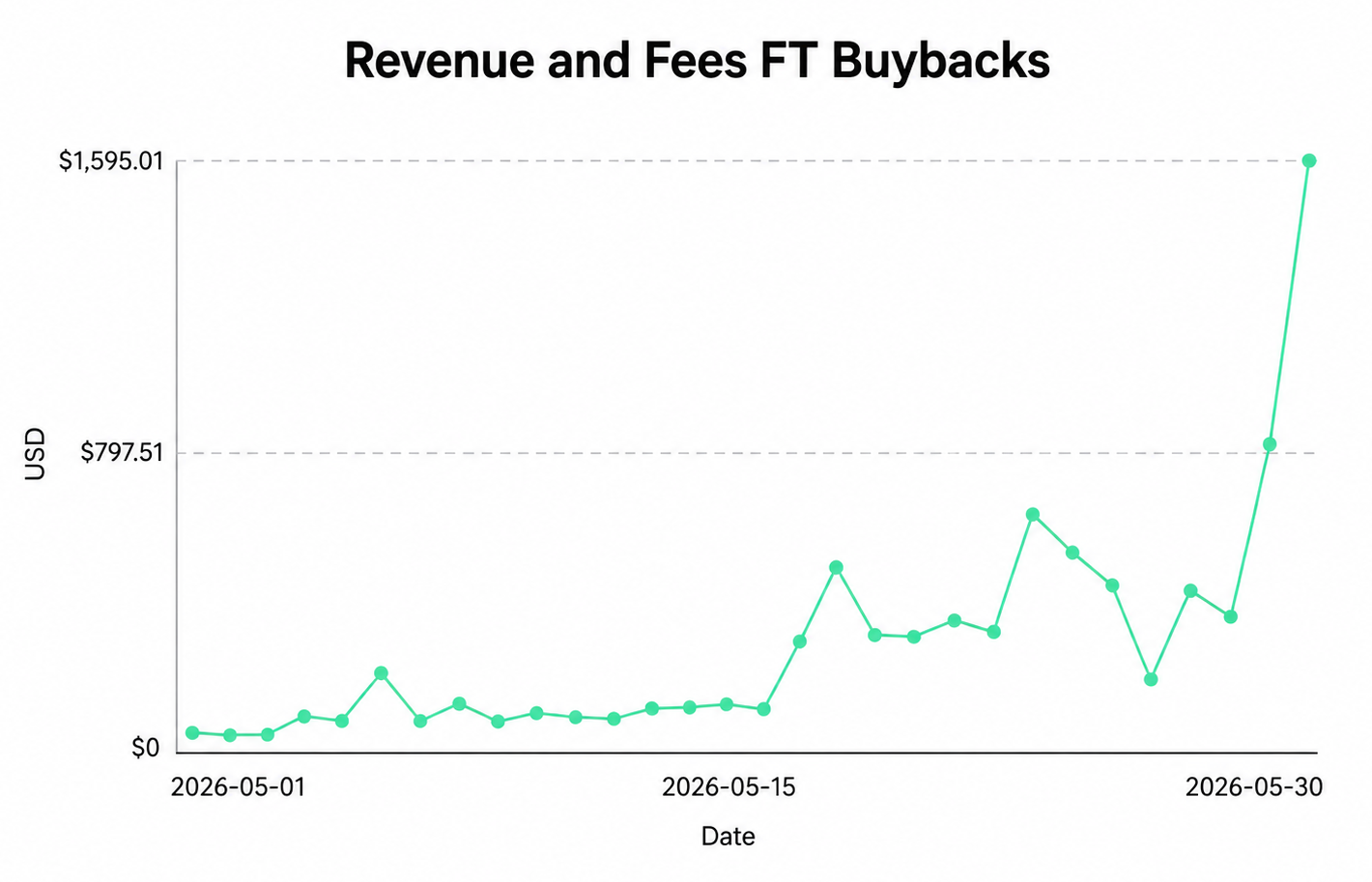
The Perpetual PUT system continued to function as designed. Holders of PUT Options, whether acquired in the primary sale or through the Flying Tulip Marketplace, maintain the right to withdraw the FT token, or exit their position and redeem the backing capital. When FT is withdrawn and a PUT is invalidated, the released backing capital is directed into secondary NAV buybacks and burns. To date, this mechanism has absorbed withdrawals while supporting the secondary market, with over $1.22M worth of FT bought back and burned.
This has been especially important in recent stressed market conditions. The system gives shorter-term participants a clean exit path while aligning the team and remaining holders around long-term product growth, rather than forcing exits directly into secondary-market selling pressure.
ftUSD total supply: $2.07M
— $1.76M on Ethereum
— $317.76K on Sonic
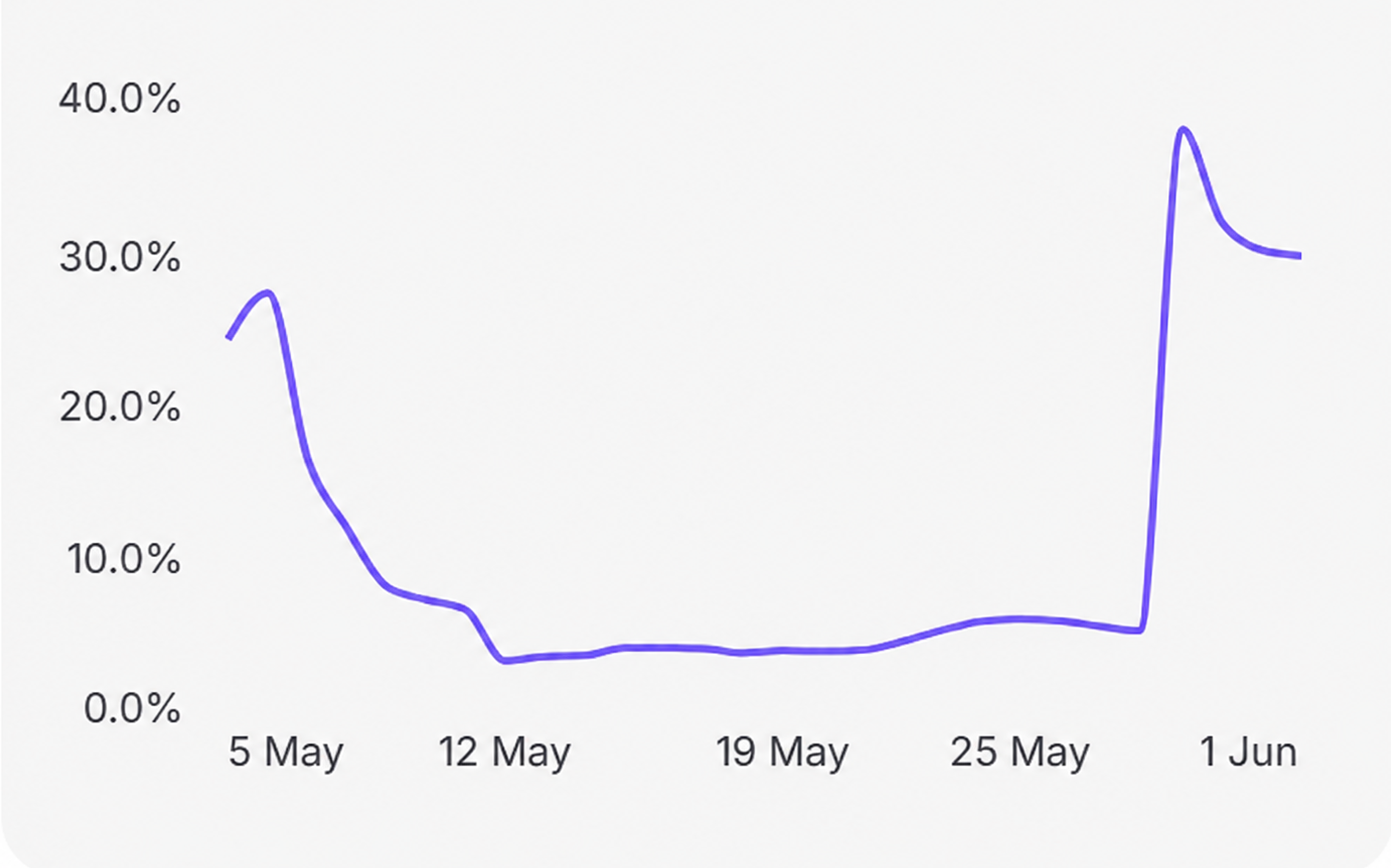
ftUSD APY:
— 8.02% on Ethereum
— 29.36% on Sonic
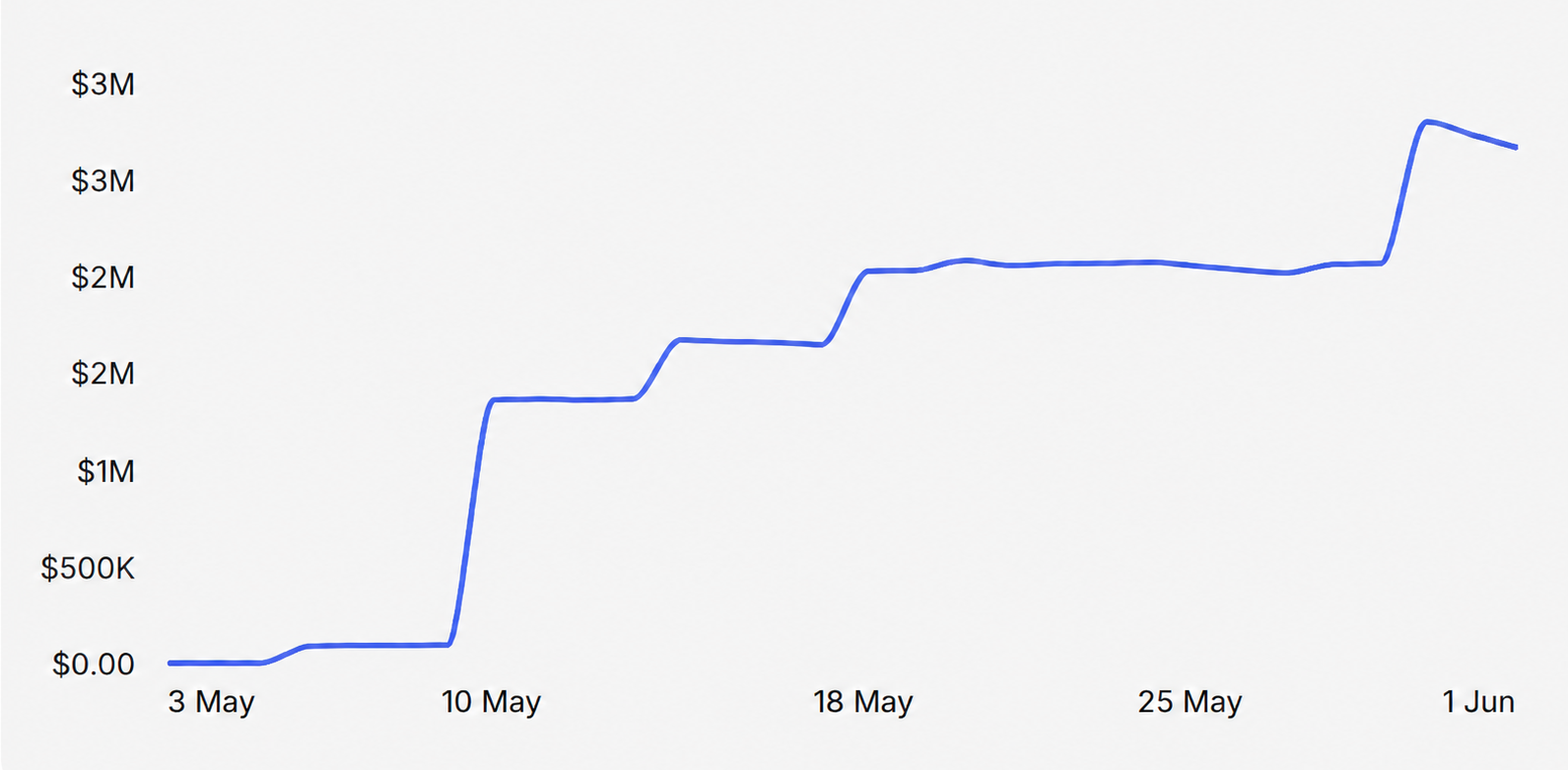
Lend TVL: $4.89M
— $2.67M on Ethereum
— $2.22M on Sonic
FT bought back and burned: 12,185,612.71M
All-time yield generated: $892.98K
Total backing capital: $57.91M
For the latest figures, see ftUSD Dashboard, Lend Dashboard, and Allocation Dashboard.
Growing ftUSD and Margin Lending
After the initial launch and rollout phase, May was about scaling the live stack and maturing the capital-efficiency layer: ftUSD and Lend.
ftUSD is Flying Tulip’s dollar-pegged stablecoin and the core liquidity and settlement asset across the protocol. It is designed to remain stable while giving users optional access to yield: unstaked ftUSD can be held or used as a stable asset across the ecosystem, while users who stake into sftUSD accrue yield from underlying strategies.
The system is transparent and auditable onchain, with verifiable reserves, yield flows, and protocol activity, rather than dependent on off-chain attestations.
In May, ftUSD continued to grow without token incentives, (before implementing) points, looping, or leverage-driven farming. At the beginning of the month, ftUSD caps on Sonic and Ethereum were increased from $1M to $5M. By June 2, ftUSD total supply had increased to $2.07M, up from $1.49 million on April 30, with activity-based APY of 29.36% on Sonic and 8.02% on Ethereum.
This growth was supported by the continued rollout of on-chain delta-neutral strategies, which move ftUSD beyond passive borrow-dependant wrapper yield toward a scalable yield generation, while minimizing directional exposure. For more on delta-neutral strategies read the April Update.
Users can mint ftUSD and stake it as sftUSD in one click, and retain liquidity: Redemptions are instant, with no unstaking periods and no exit queues. Supported minting assets for ftUSD are USDC and USDT on Ethereum, and USDC and USSD on Sonic.
USSD, Sonic’s native stablecoin backed 1:1 by U.S. Treasuries, was added as supported collateral for ftUSD in May. It is fully backed 1:1 by short-duration USD assets, including tokenized U.S. Treasury products, and gives Sonic users another way to access Flying Tulip’s stable asset layer.
so @flyingtulip_ has started
— CΞAZOR.eth mak'n 🥪s 🦇🔊 (@Ceazor7) May 20, 2026
all this with one signature on @SonicLabs it less than 2 seconds
how?
read the documentation! pic.twitter.com/aez0j4IbtR
The secret ingredient are Sessions.
USSD is also supported in Flying Tulip’s margin-based Lend, where users can supply it as collateral, and support borrowing activity across the margin system.
Lend allows users to supply assets and earn yield while giving borrowers access to liquidity. But its role in the Flying Tulip stack goes beyond a standard money market: it enables delta-neutral strategies for ftUSD and provides the margin infrastructure for what comes next.
In general, depositor yield on Lend comes from two sources: borrower interest on capital that is actively borrowed, and strategy yield on idle, not-yet-borrowed capital. This means deposit APY reflects both borrow-side demand and yield generated by unused liquidity, rather than borrow demand alone.
This account-based design is what makes Lend central to the rest of the product suite, and what makes Flying Tulip more capital-efficient than traditional money markets. Its on-chain margin accounts are intended to feed into Spot, Leverage Trading, TRS, perps, options, and insurance, allowing the same supplied capital and collateral infrastructure to support multiple product flows.
One example is Spot, designed as a hybrid trading venue where order-book CLOB liquidity and AMM liquidity can support the same market. Limit orders will be structured as signed intents with a minimum price and expiry, allowing execution to be handled through Flying Tulip’s routing and solver infrastructure. Because Spot is integrated with the account-based Lend system, assets can remain inside the Flying Tulip account system while an order is pending, rather than sitting idle in a separate venue. While those assets remain deposited in Lend, they can continue earning yield until execution through bought-back and distributed FT.
Lend also enables margin trading by providing an account-based collateral layer from which positions can borrow and settle. To open a leveraged position, a user supplies margin into Lend; the system can then borrow the asset the user is effectively shorting, route it through RFQ (Request for Quote)/swap execution into the asset the user wants to be long, and deposit that long asset back as collateral. The reverse happens when the position is closed: collateral is withdrawn, swapped back into the debt asset, and the borrow is repaid. From the user’s perspective, this can feel like a normal leveraged long/short trade, while under the hood it is built from deposited margin, borrowed liquidity, solver-routed execution, and collateral updates inside Flying Tulip’s lending system.
Lend launched in April through a guarded, capped rollout on Sonic. In May, the focus shifted from initial deployment toward broader production scale: expanding caps, adding new collateral, launching Lend on Ethereum, enabling ftUSD as collateral, and improving the user experience for smaller borrowing positions.
On Sonic, Lend caps have been increased for USDC (1M → 10M) and for wS (30M → 100M). To make borrowing more accessible even for smaller accounts, minimum margin equity was reduced from $250 to $10, and the minimum repayment amount from $10 to $2. On Ethereum, caps were increased for BTC (100 collateral, 20 borrowable), and for USDC and USDT ($10M collateral, $2M borrowable). BTC borrow costs were reduced on both Sonic and Ethereum through interest-rate model optimization.
Higher caps, lower minimums, reduced borrowing costs, and a continued focus on security are helping move Lend towards broader use. On Sonic, Lend TVL grew from $1.76M on April 30 to $2.22M on June 2. In less than a month after launch, and without any incentives, Lend on Ethereum reached TVL of $2.67M.
What comes next?
DeFi is still early. There remains much more to explore, build and improve.
Flying Tulip's mission is to make the original promise of DeFi Summer real: open, on-chain innovative financial products that people actually need and want to use.
It brings together years of accumulated experience in DeFi, trading, risk management, and protocol design into a suite of novel, next-generation, fully on-chain products that are built not only to compete with centralized alternatives, but to outperform them.
I've been testing @flyingtulip_ on @SonicLabs for the past few weeks. The feature set and the entire stack are something I have not seen executed this cohesively onchain before.
— Dunking Squirrel (@DunkingSquirrel) May 28, 2026
- Delta neutral yielding stablecoin
- Spot orderbook
- Margin lending
- Total return swaps
-…
Flying Tulip's token-first design reflects the fair-launch philosophy and the original vision of DeFi. Since team operations are currently funded exclusively from yield of investor capital deploying into conservative, unwind-friendly on-chain strategies (with no leverage and no bridging), PUT holders retain the option to exit their full position at any point in time.
Token supply is 100% unlocked, with all sale rounds receiving exactly the same terms, and the team getting no upfront token allocation. The team is instead rewarded from revenue-driven open-market buybacks, meaning rewards depend on products working and users actually using them.
Once protocol revenue is sufficient to sustain team operations and remains above $3,500 per day, all unallocated and divested supply is planned to be burned. At the time of writing, this represents over 93% of total supply.
Looking back as Flying Tulip approaches its first 100 days since launch, there is already plenty of encouraging progress and a lot build on. Major pieces of the stack have been delivered, live products are beginning to scale, and the next set of releases — Spot, Leverage Trading, TRS, and beyond — is moving closer to launch.
Links
Socials
- Website: https://flyingtulip.com
- X/Twitter: https://x.com/flyingtulip_
- Discord: https://discord.gg/flyingtulip
Products
- PUT Marketplace: https://marketplace.flyingtulip.com
- ftPUT: https://flyingtulip.com/allocation/dashboard
- ftUSD: https://flyingtulip.com/ftusd/dashboard
- Margin Lending: https://flyingtulip.com/lend/dashboard
Documentation
- FT Docs: https://docs.flyingtulip.com/product-suite/ft-token
- ftUSD Docs: https://docs.flyingtulip.com/product-suite/ft-usd
- Roadmap: https://docs.flyingtulip.com/roadmap
- Contract addresses: https://docs.flyingtulip.com/contract-addresses
Community Resources
- Supply Dashboard (Tracks FT buybacks, burned, circulating, and non-circulating supply): https://ftdashboard.xyz
- Advanced PUTs Marketplace Dashboard: https://ftdashboard.xyz/puts-marketplace.html
- Circuit Breaker Status + Telegram Alerts: https://ftcircuitbreaker.com
- Sonic/ETH metrics and Borrow-Loop calculator: https://flyingtulip-dash.vercel.app